Why Brand Consistency Matters More as a Company Grows
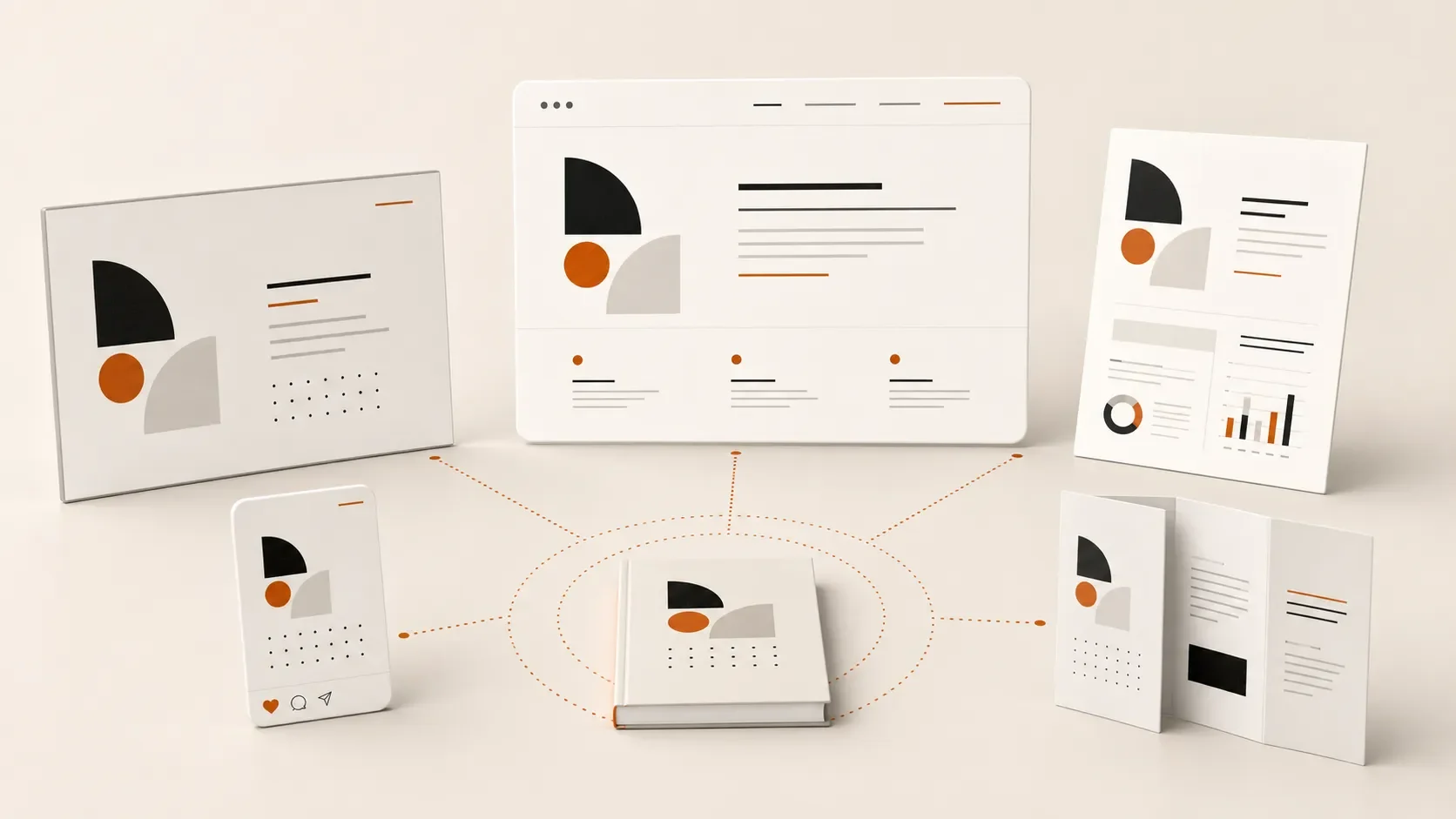
Brand consistency is relatively easy when a company is small. A founder approves every presentation, one designer creates most of the marketing materials, and everyone knows which logo file to use.
Growth changes that.
More employees, departments, vendors, platforms, and sales opportunities mean more people are representing the brand. Without a clear visual system, small inconsistencies quickly multiply. The website follows one style, sales presentations follow another, and social graphics depend on whoever created the most recent template.
These differences may seem minor individually. Together, they can weaken trust, slow teams down, and make an established company appear less organized than it really is.
What Is Brand Consistency?
Brand consistency means presenting the same recognizable identity across every customer interaction.
This includes more than using the correct logo. It also involves:
Color
Typography
Photography
Illustration
Layout
Messaging
Presentation templates
Website components
Social media graphics
Sales and marketing materials
Consistency does not mean every piece of communication must look identical. It means everything should feel like it came from the same organization.
A flexible brand system can support different audiences, campaigns, and formats while maintaining a clear visual connection between them.
Why Does Growth Make Brand Consistency Harder?
As a company grows, control becomes distributed.
The marketing team may manage the website. Sales representatives create their own presentations. Human resources develops recruiting materials. An outside agency launches a campaign. A freelance designer produces an event banner. Leadership occasionally builds its own documents.
Each contributor may make reasonable design decisions. The problem is that those decisions are often made independently.
Without shared guidelines, approved templates, and an organized asset library, employees fill the gaps themselves. They choose a similar font, approximate a brand color, stretch an old presentation into a new format, or download the first logo they can find.
The result is rarely one dramatic brand failure. It is a gradual collection of small inconsistencies.
How Inconsistency Can Weaken Trust
People use visual signals to decide whether an organization feels credible and established.
Imagine a prospective client visits a polished website and then receives a sales presentation that looks several years out of date. The information may be accurate, but the difference creates friction. The prospect may wonder which version of the company is current or whether the organization pays attention to details.
The same disconnect can happen between social media and the website, between a trade show booth and its supporting handouts, or between marketing materials created by different departments.
Customers may not identify the exact font, color, or spacing that changed. They simply notice that something feels disconnected.
Consistent design creates familiarity. Familiarity makes a company easier to recognize, understand, and trust.
The Hidden Cost of Recreating Materials
Brand inconsistency is also an operational problem.
When employees do not have reliable templates or know where approved assets are stored, they spend time solving the same design problems repeatedly.
A salesperson rebuilds a pitch deck because the existing version is difficult to edit. A marketing coordinator searches through folders for the current logo. A new employee creates a social graphic from scratch because no usable template exists. A designer corrects basic brand issues instead of focusing on more valuable creative work.
This produces a cycle of unnecessary decisions, revisions, and approvals.
A strong brand system reduces that work. It gives people a reliable starting point, allowing them to create materials faster without reinventing the brand each time.
Why a Logo and Color Palette Are Not Enough
Many growing companies have basic brand guidelines covering logo usage, colors, and fonts. That is a useful foundation, but it may not provide enough direction for everyday work.
Teams need to see how the identity applies to real situations.
Useful brand guidelines might include examples for:
Presentation slides
Social media posts
Sales sheets
Reports
Email graphics
Digital advertising
Event materials
Website pages
Charts and data visualization
Photography selection
Templates are especially important. Guidelines explain the system, while templates help people use it.
The goal is not to restrict every decision. It is to make the correct decision easier.
What a Scalable Brand System Includes
A scalable brand system combines standards, tools, and examples that different teams can use confidently.
Depending on the organization, that system may include:
A complete set of logo files
Defined colors and typography
Clear visual hierarchy
Photography and illustration direction
Flexible layout principles
Presentation and document templates
Social and campaign templates
Reusable website components
An organized asset library
Practical brand guidelines
A process for reviewing new materials
The system should be detailed enough to maintain consistency but simple enough that people actually use it.
If every routine decision requires a designer’s approval, the system is too restrictive. If employees still have to guess, it is not complete enough.
How to Improve Brand Consistency
Audit the Most Visible Materials
Start with the places customers interact with the brand most frequently. Review the website, sales presentations, proposals, social channels, email campaigns, event materials, and recruiting documents.
Look for differences in typography, color, imagery, layout, messaging, and overall quality.
Identify Repeated Problems
Some inconsistencies are symptoms of a larger operational issue. If every salesperson uses a different deck, the answer may be a flexible presentation system rather than another round of individual corrections.
Prioritize the materials that are frequently created, widely distributed, or closely connected to revenue.
Create Practical Guidelines
Document the decisions employees make in their actual work. Show examples instead of relying only on abstract rules.
A useful guide should help someone complete a task, not simply describe the brand.
Build Reusable Templates
Create approved starting points for common materials. Templates reduce production time while leaving enough flexibility for different content and audiences.
Establish Clear Ownership
Someone should be responsible for maintaining the system, updating templates, organizing assets, and answering brand questions. This does not require controlling every execution, but it does require a clear source of truth.
Brand Consistency Is Infrastructure for Growth
Brand consistency is sometimes treated as a cosmetic concern. In practice, it affects how a company is perceived and how efficiently its teams operate.
A well-designed system helps an organization:
Build recognition across channels
Present a more credible and established image
Reduce unnecessary design decisions
Create materials more efficiently
Onboard employees and vendors faster
Maintain quality as output increases
The value of a brand system becomes more visible as the company grows. What once lived naturally in the founder’s head must eventually become a shared set of tools that other people can understand and use.
Growth introduces complexity. A consistent brand system keeps that complexity from becoming confusion.
Frequently Asked Questions
Does brand consistency mean everything must look the same?
No. A strong identity should be flexible enough to support different formats, messages, and audiences. Consistency comes from shared visual principles, not identical layouts.
When should a company update its brand guidelines?
Guidelines should be reviewed when the organization adds new services, enters new markets, redesigns its website, works with more outside partners, or finds that employees frequently create inconsistent materials.
Who should be responsible for brand consistency?
Ownership often sits with marketing or creative leadership, but every department that creates external communication plays a role. Clear standards and templates make shared responsibility possible.
Can templates solve every consistency problem?
Templates help, but they work best as part of a broader system. Teams also need organized assets, relevant examples, clear guidance, and someone responsible for maintaining them.
Key Takeaway
The more people who communicate on behalf of a company, the more important a shared visual system becomes.
Brand consistency protects trust, reduces wasted time, and gives teams the tools to create effective materials without starting from scratch. It is not about controlling every design decision. It is about helping a growing organization continue to look and communicate like one company.